

Table of Contents
ToggleRenters face a unique security challenge: protecting their space without violating a lease or losing a security deposit. Unlike homeowners who can drill, hardwire, and modify at will, apartment dwellers need alarm systems that deliver robust protection while remaining fully reversible. The good news? Modern wireless technology has caught up with these constraints. Today’s apartment-friendly alarm systems offer professional-grade monitoring, smart home integration, and easy installation, all without a single screw hole in your landlord’s drywall.
Key Takeaways
- Modern wireless alarm systems for apartments use adhesive mounting and plug-in hubs, requiring no permanent modifications and enabling full removal without wall damage—making them ideal for renters bound by lease restrictions.
- An apartment alarm system addresses both intrusion threats and environmental risks like fire and carbon monoxide, with professional monitoring ($15-30/month) offering 24/7 response, while DIY options provide smartphone alerts at lower cost but require your own monitoring response.
- Wireless systems depend on batteries (1-3 year lifespan) and reliable Wi-Fi, so consider cellular backup modules if your apartment has thick concrete walls or spotty internet connectivity.
- Installation success depends on clean surfaces, proper sensor alignment (magnet and sensor within ½ inch), motion sensors mounted 6-7 feet high in corners, and thorough testing via the system’s app before relying on it daily.
- Notify your landlord in writing before installation with product specifications showing non-invasive setup, and document the installation and removal with photos to protect your security deposit and prevent disputes over wall damage.
- Apartment dwellers should verify local alarm permits are obtained (typically $20-50 annually) and confirm that renters insurance may offer monthly discounts (often $15-20 savings) when alarm systems are professionally verified.
Why Apartment Dwellers Need a Security System
The assumption that apartment buildings are inherently safer than standalone homes doesn’t hold up to scrutiny. Multi-unit buildings present their own vulnerabilities: shared entry points, transient neighbors, package theft from common areas, and the simple reality that burglars often target apartments precisely because residents assume building security is sufficient.
Apartment dwellers typically lack control over exterior doors, locks, and building-wide security measures. A landlord’s deadbolt might be builder-grade, and that lobby intercom system could be decades old. Renters need a secondary layer of protection that covers their specific unit, door and window sensors, motion detection, and immediate alerts when someone enters their space.
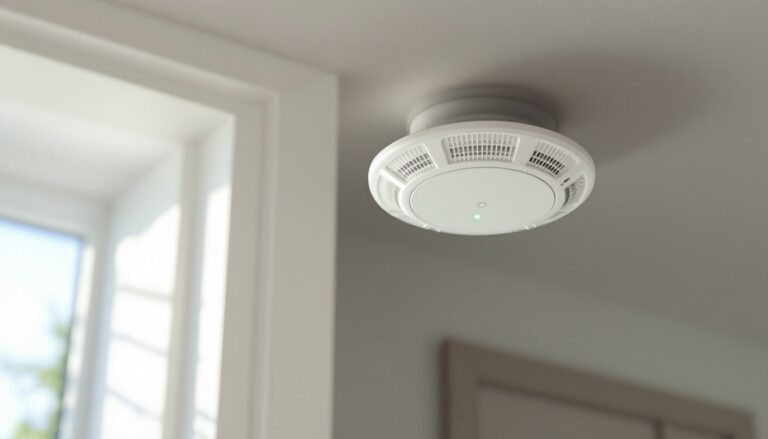
Beyond intrusion, apartment alarm systems address everyday risks like fire, carbon monoxide, and water leaks. Many modern systems include environmental sensors that alert residents and monitoring centers to smoke or flooding before catastrophic damage occurs. Given that renters insurance averages $15-20 per month and some insurers offer discounts for verified alarm systems, the investment often pays for itself through reduced premiums.
The psychological benefit is real. Knowing your entry points are monitored, whether you’re at work, on vacation, or asleep, reduces anxiety and improves quality of life. For those living alone or in unfamiliar neighborhoods, that peace of mind is invaluable.
Types of Alarm Systems Best Suited for Apartments
Wireless vs. Hardwired Systems
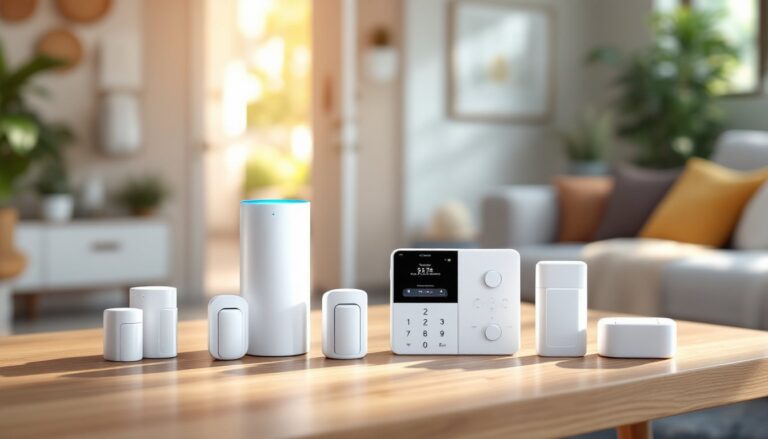
Wireless systems dominate the apartment security market for one simple reason: they don’t require running wires through walls or permanent modifications. Sensors communicate with a central hub via Z-Wave, Zigbee, or proprietary RF protocols, typically with a range of 100-300 feet, more than adequate for most apartments.
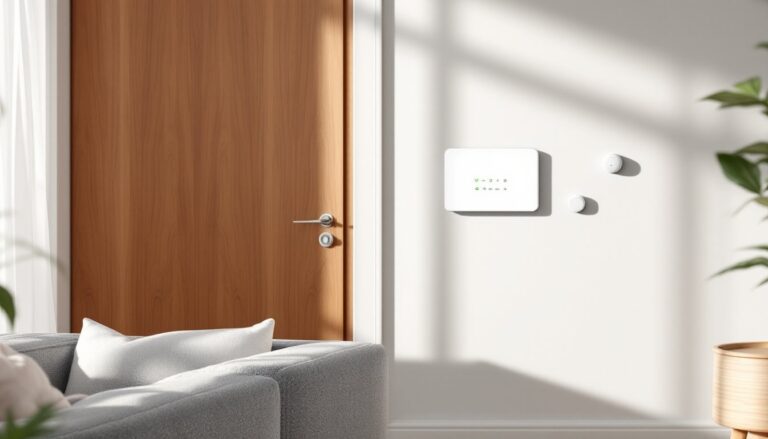
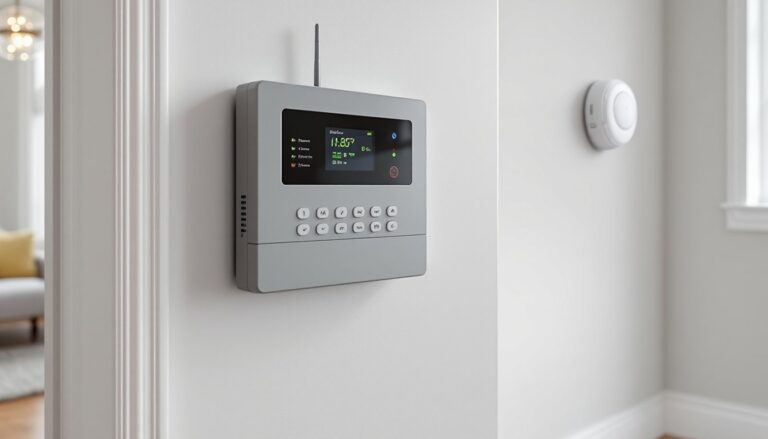
Battery-powered sensors stick to door frames and windows using 3M VHB adhesive strips or removable Command-style mounting hardware. These adhesives hold firmly during use but release cleanly when it’s time to move, leaving no residue or damage. The hub itself plugs into a standard outlet and connects to your Wi-Fi network, making setup a 15-minute job rather than a full-day installation.
Hardwired systems, by contrast, require drilling through studs, fishing cable through walls, and often involve patching and painting afterward. They’re superior for permanent installations in owned homes, more reliable power, no battery changes, and no wireless interference, but they’re completely impractical for renters who need to restore walls to original condition at move-out.
Trade-off to consider: Wireless systems depend on batteries (typically lasting 1-3 years per sensor) and a stable Wi-Fi connection. If your apartment has thick concrete walls or spotty internet, you may need a mesh network or cellular backup module.
DIY vs. Professional Monitoring Options
DIY systems put control in the renter’s hands. Companies like SimpliSafe, Ring Alarm, and Wyze offer equipment packages starting around $200-300 with no contracts. Renters receive smartphone alerts when sensors trigger, and they decide how to respond, check the camera feed, call the police themselves, or ignore a false alarm.
The downside? You’re the monitoring center. If your phone dies, you’re out of range, or you’re on a plane, alerts go unanswered. Some jurisdictions also limit police response to unverified alarms, meaning officers won’t dispatch without visual confirmation or a third-party monitoring service vouching for the emergency.
Professional monitoring adds a 24/7 response team for typically $15-30 per month. When an alarm trips, the monitoring center contacts you via phone, confirms the emergency, and dispatches authorities if needed. Many services also monitor environmental sensors and can call fire departments for smoke detection, which is especially valuable if you’re traveling or sleeping heavily.
Some systems offer hybrid monitoring, you self-monitor most of the time but can activate professional monitoring for $5-10 during vacations or high-risk periods. This flexibility suits renters who want to minimize monthly costs but need backup during extended absences. Systems integrating with smart home automation platforms provide additional flexibility through custom alert rules and third-party device compatibility.
Key Features to Look for in an Apartment Alarm System
Removable installation tops the list. Confirm that sensors use adhesive mounting rather than screws, and that the base station is plug-in rather than hardwired. Ask the manufacturer directly about wall damage, reputable companies will guarantee residue-free removal.
Cellular or dual-path backup ensures the system works even if your Wi-Fi goes down or an intruder cuts the internet line. Many systems include a built-in cellular chip that maintains connectivity to monitoring centers independent of your home network.
Entry/exit delay programming is critical for apartments where the front door opens directly into living space. A 30-60 second delay gives you time to disarm the system after unlocking without triggering a false alarm. Adjustable sensitivity on motion sensors also helps avoid alerts from pets or HVAC vents moving curtains.
Smart home integration allows your alarm to work with existing devices. Pairing with smart locks lets you arm the system automatically when the door locks, while integration with smart lights can trigger “away mode” lighting to simulate occupancy.
Camera compatibility extends protection beyond sensors. A video doorbell captures package thieves and unexpected visitors, while indoor cameras provide visual verification before calling police. Reviewing DIY security system options helps identify systems with the best camera ecosystems for rental properties.
Environmental sensors for smoke, CO, water leaks, and temperature extremes protect against non-intrusion emergencies. Water sensors placed under sinks, near water heaters, or by washing machine hookups can prevent thousands in damage from undetected leaks.
Avoid systems with proprietary components that lock you into a single ecosystem. Open platforms let you expand with third-party sensors and cameras, while closed systems force expensive brand-specific upgrades.
Installing Your Apartment Alarm System Without Damaging Walls
Start by mapping your entry points. Walk through the apartment and identify every door and accessible window. Ground-floor and fire-escape-accessible windows need sensors: third-story windows with no exterior access can usually skip them unless you’re particularly cautious.
Clean surfaces thoroughly before applying adhesive sensors. Use isopropyl alcohol (70% or higher) to remove dust, oils, and residue from door frames, window casings, and walls. Let surfaces dry completely, moisture under adhesive strips causes early failure.
For door and window sensors, align the magnet piece with the sensor body so they’re within ½ inch when the door/window is closed. Most sensors have an LED indicator or app notification confirming proper alignment during setup. Position them on the frame’s interior side, not where they’re visible from outside, burglars who spot sensors know to look for easy workarounds.
Motion sensors should be mounted 6-7 feet high in room corners, angled downward to cover entry paths. Avoid pointing them at windows (sunlight and moving tree shadows cause false alarms) or HVAC vents (temperature changes can trigger infrared sensors).
If your apartment has textured walls or rough surfaces where adhesive won’t grip, use adhesive-backed mounting plates that spread the load across a larger area. For particularly heavy equipment or unreliable surfaces, consider freestanding options, base stations can sit on shelves, and some door sensors offer standing mounts that wedge into door frames without adhesive.
Cable management keeps the installation tidy. Use small adhesive cable clips to route power cables along baseboards and door frames. Stick to neutral colors that blend with trim, white on white, beige on beige.
Once installed, test every sensor individually through the system’s app. Open and close each door and window, walk through motion sensor zones, and verify that alerts reach your phone within seconds. Adjust sensitivity settings if you’re getting phantom alerts from street traffic vibrations or neighbor noise.
When it’s time to move, remove sensors slowly by pulling parallel to the surface, not straight away. Heating adhesive with a hairdryer for 20-30 seconds softens the bond and reduces the chance of pulling paint or finish. Any residual adhesive comes off with more isopropyl alcohol and a microfiber cloth.
Navigating Landlord Permissions and Lease Agreements
Review your lease before purchasing equipment. Most leases prohibit permanent modifications but allow temporary, removable installations. Look for clauses about “alterations,” “fixtures,” or “security devices”, language varies, but the intent is usually to prevent structural changes.
If the lease is silent on alarm systems, notify your landlord in writing before installation. A brief email explaining that you’re installing a wireless, adhesive-mounted system with no wall penetration typically receives approval. Include product specs or links showing the non-invasive installation method. This paper trail protects you if disputes arise later.
Some landlords explicitly prohibit alarm systems due to concerns about false alarms that disturb neighbors or waste police resources. If you encounter this, propose a compromise: professional monitoring with verified response (reducing false alarms), limiting audible sirens to interior-only alerts, or providing the landlord with emergency contact access in your monitoring account.
For buildings with existing security systems or doormen, landlords may argue additional protection is unnecessary. Respectfully point out that building-wide security doesn’t cover in-unit intrusion or environmental monitoring. Many renters successfully argue that personal alarm systems complement rather than duplicate building security.
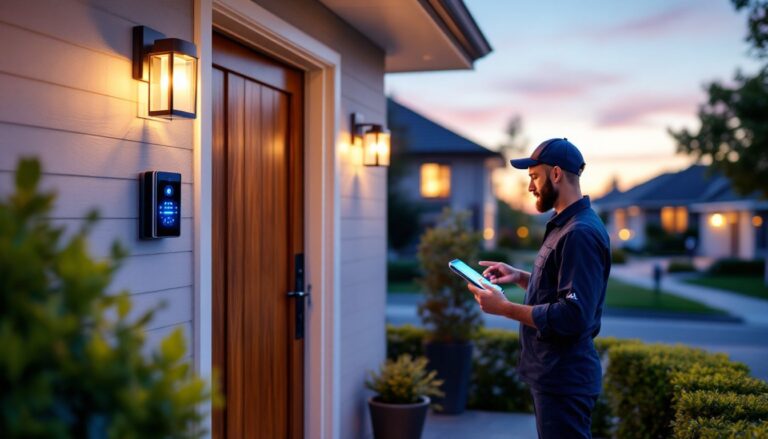
If your system includes exterior cameras or video doorbells, additional permission is usually required. Cameras pointing at hallways, stairwells, or neighboring units raise privacy concerns. Position cameras to capture only your doorway and immediate threshold. Some landlords appreciate doorbell cameras because they document package theft and vandalism affecting the building.
Document the installation with photos showing clean, undamaged walls and proper sensor placement. Repeat the photo documentation when you move out after removing equipment. This evidence prevents security deposit disputes over alleged damage.
About professional monitoring, provide your landlord and property manager with emergency contact information for your monitoring service. If the fire alarm triggers while you’re away, monitors can contact building management to address the emergency. This coordination often earns landlord approval.
Some municipalities require alarm permits even for wireless systems. Check with your local police department, permits typically cost $20-50 annually and may include fines for excessive false alarms (usually more than 3-4 per year). Failing to obtain required permits can result in police refusing to respond to alarm calls.
Renters considering motion detection technology should verify that pet-immune sensors are available if animals are part of the household, as this reduces false alarms that might violate noise ordinances. Similarly, those comparing different providers might research whether professional monitoring options include landlord coordination services. Understanding how established brands like AT&T security platforms or Ring’s offerings handle rental situations can inform better purchasing decisions. Some renters also explore Google’s smart home ecosystem for its reversibility and integration features, while others prefer systems with strong reputations for customer service during moves. When evaluating cost versus features, consulting resources on home service providers and project costs can help renters budget appropriately for both equipment and potential monitoring fees.
Bottom line: Communicate early, install responsibly, document everything, and restore the apartment to original condition at move-out. Most landlords approve wireless alarm systems once they understand the non-invasive installation and added protection for their property.