

Table of Contents
ToggleA working fire alarm isn’t a nice-to-have, it’s the difference between waking up to evacuate and not waking up at all. According to the National Fire Protection Association, three out of five fire deaths happen in homes with no smoke alarms or non-functioning ones. Whether you’re building new, renovating, or just replacing an old chirping unit, understanding how fire detection systems work and where to place them will keep your household safer. This guide walks through detector types, installation zones, and maintenance schedules so you can make informed decisions without the sales pitch.
Key Takeaways
- Three out of five fire deaths occur in homes with no smoke alarms or non-functioning ones, making a fire detection and alarm system essential for household safety.
- Choose between ionization alarms (best for fast-flaming fires), photoelectric alarms (best for smoldering fires), or dual-sensor models that combine both technologies for comprehensive protection.
- Install fire alarms in each bedroom, outside sleeping areas, and on every level including basements according to International Residential Code (IRC), with ceiling mounting 4 inches from walls for optimal performance.
- Interconnected alarms—whether hardwired or wireless—ensure all units sound simultaneously, which is critical in multi-story homes where a fire on one level might otherwise go undetected.
- Test alarms monthly, replace batteries annually in hardwired units, vacuum vents every six months, and retire all units after 10 years to maintain consistent detection reliability.
- Smart fire alarm systems offer remote alerts and voice location announcements but require reliable Wi-Fi and should retain independent local alarm function during internet outages.
What Is a Fire Detection and Alarm System?
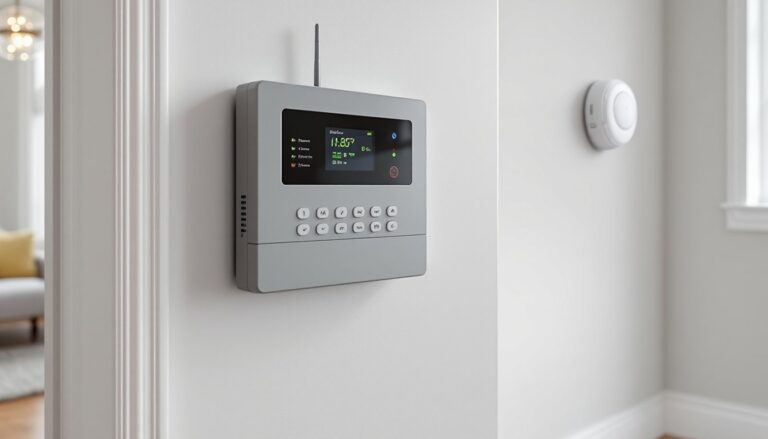
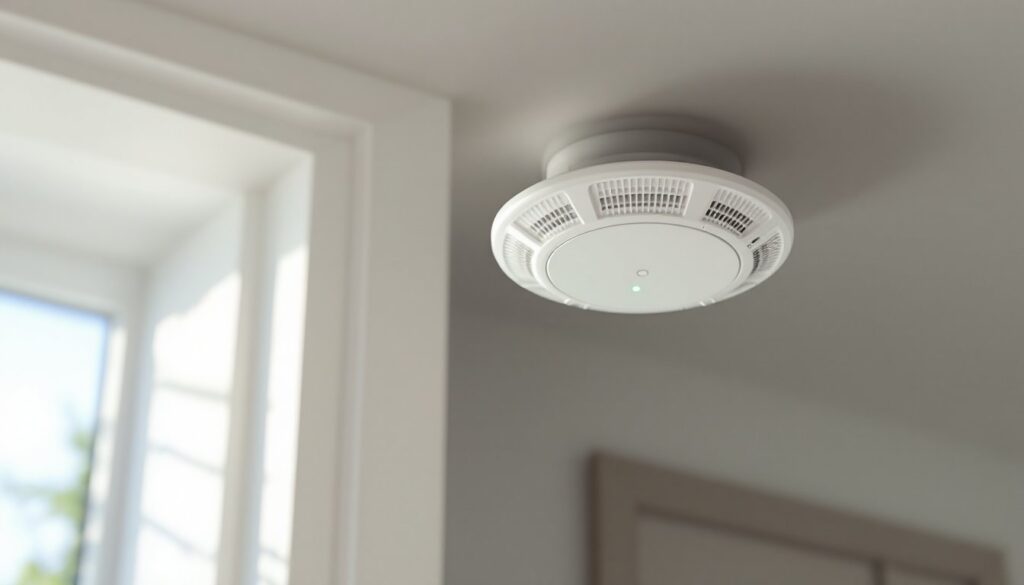
A fire detection and alarm system is a network of devices designed to sense smoke, heat, or flame and alert occupants through audible alarms, visual signals, or connected notifications. In residential settings, this usually means smoke alarms mounted on ceilings or high on walls, though some systems add heat detectors in garages or attics where smoke alarms might false-trigger.
Most homes use standalone battery-powered units or hardwired alarms with battery backup. Hardwired systems connect through 120V household circuits and often include an interconnect wire so that when one alarm sounds, they all sound, critical in multi-story homes where a basement fire might not wake someone upstairs.
In new construction and major renovations, the International Residential Code (IRC) requires smoke alarms in each bedroom, outside each sleeping area, and on every level including basements. If your home predates these rules, you’re not required to retrofit to code in most jurisdictions, but it’s a smart upgrade. Interconnected alarms can be added by running 14/3 Romex between units or by using wireless RF-interconnect models that sync without new wiring.
For homes with complex layouts or outbuildings, professionally installed systems may include a central control panel, manual pull stations, and monitoring service that dispatches fire departments automatically. These setups overlap with security systems and often require licensed alarm system installers to ensure code compliance and proper integration.
Types of Fire Detection and Alarm Systems for Your Home
Ionization vs. Photoelectric Smoke Detectors
Smoke alarms fall into two main sensing technologies, and each has strengths. Ionization alarms use a small radioactive source (Americium-241) to ionize air between two charged plates. When smoke particles disrupt the ion flow, the alarm triggers. They respond faster to fast-flaming fires, think paper, grease, or dry wood, but are prone to nuisance alarms near kitchens.
Photoelectric alarms use a light beam and sensor set at an angle inside a chamber. Smoke scatters the light onto the sensor, triggering the alarm. They excel at detecting slow, smoldering fires like upholstery or bedding that produce heavy smoke before open flame. They’re less likely to false-alarm from cooking steam.
The NFPA and fire safety experts recommend dual-sensor alarms that combine both technologies, or installing a mix of ionization and photoelectric units throughout the home. If budget allows, dual-sensor models offer the broadest protection. Look for units labeled to UL 217 standard for smoke alarms.
Some alarms add carbon monoxide (CO) detection in a combo unit. CO detectors use electrochemical sensors and should be placed near sleeping areas, but don’t substitute a combo unit for dedicated smoke coverage in every required zone.
Smart Fire Alarm Systems and Connected Devices
Smart smoke alarms connect via Wi-Fi or proprietary mesh protocols (like Nest’s Thread network) to send alerts to your phone when you’re away, silence nuisance alarms remotely, and run self-checks. Brands like Nest Protect, First Alert Onelink, and Kidde offer app-based notifications, voice location announcements (“Smoke detected in kitchen”), and integration with home automation platforms.
These systems pair well with smart security setups, some integrated home alarm systems can trigger lights, unlock doors, or shut down HVAC to contain smoke spread. Installation is straightforward: most smart alarms mount like traditional units using included brackets and connect to your home Wi-Fi during setup.
Smart alarms still require hardwiring or 10-year sealed batteries depending on model. The convenience is real, you’ll get low-battery warnings on your phone instead of 3 a.m. chirps, but they cost two to three times more than basic alarms. If you go this route, verify the system works during internet outages: the local alarm sounder should function independently of cloud connectivity.
For whole-home monitored systems, fire alarm system installers can integrate smoke, heat, and CO detectors with a central panel that contacts a monitoring station, which then dispatches emergency services. This is common in custom homes or when bundling fire detection with security and access control.
How Fire Detection Systems Work to Keep You Safe
When smoke enters an ionization alarm’s chamber, particles attach to ions and reduce current flow between plates. A microprocessor detects the drop and sounds the 85-decibel piezoelectric alarm, loud enough to wake most people through closed doors. Photoelectric alarms trigger when scattered light intensity crosses a threshold, typically calibrated to ignore dust but react to smoke density.
Interconnected alarms share a signal wire (usually red or yellow in 14/3 cable) so that activating one unit trips all alarms in the network. In hardwired systems, this wire carries a low-voltage pulse: in wireless models, an RF transmitter broadcasts to paired units within range. This networked response is essential in larger homes where distance or closed doors might muffle a single alarm.
Heat detectors, often installed in garages or unfinished attics, trigger at fixed temperatures (usually 135°F or 194°F) or rapid temperature rise (15°F per minute). They won’t catch smoke but prevent false alarms in dusty or high-humidity spaces. They’re supplementary, never use heat detectors as primary protection in living areas.
Modern alarms include hush buttons to silence nuisance alarms for several minutes, and many have dual-chamber sensing to reduce false triggers. Some high-end units feature voice alerts describing the threat (“Fire.” vs. “Carbon monoxide.”) to aid evacuation decisions. According to research highlighted by Good Housekeeping, photoelectric sensors reduce false alarms by up to 50% compared to ionization-only models in typical home environments.
Power sources matter. Battery-only units use 9V replaceable batteries or sealed 10-year lithium cells: hardwired alarms pull from household circuits with battery backup for outages. If you’re upgrading from battery to hardwired, you’ll need to run 14/2 or 14/3 Romex to each location, a straightforward task in unfinished basements or attics, but more involved in finished spaces. Some DIY alarm system projects integrate fire detection with broader security wiring.
Where to Install Fire Alarms in Your Home for Maximum Protection
IRC code (R314) specifies smoke alarms in each bedroom, outside each sleeping area (within 21 feet of bedroom doors), and on every level including basements. For homes with split levels or mezzanines, place an alarm on the upper level of the split. In homes with cathedral or high ceilings, mount alarms within 3 feet of the peak, hot air rises, and dead air pockets at the very peak can delay smoke contact.
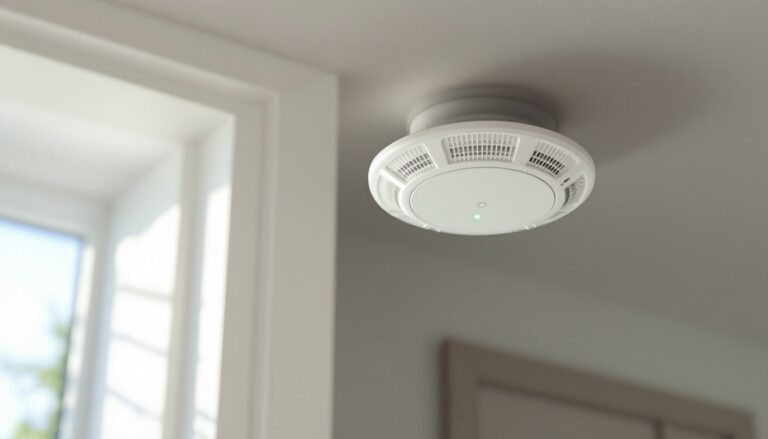
Ceiling mounting is ideal: center the alarm or place it at least 4 inches from any wall. If wall mounting, install the alarm 4 to 12 inches below the ceiling. Keep alarms at least 3 feet from HVAC vents, ceiling fans, or air returns where airflow might push smoke away from sensors. Avoid corners, air circulation is poorest there.
Kitchens are tricky. Ionization alarms close to stoves trigger from cooking smoke, so place alarms at least 10 feet from cooking appliances or use a photoelectric model. Many codes allow a heat detector or photoelectric alarm in the kitchen as an alternative. In hallways longer than 40 feet, install multiple alarms to ensure coverage.
Garages, attics, and utility rooms benefit from heat detectors instead of smoke alarms. These spaces often have temperature swings, exhaust fumes, or dust that cause false alarms. If your furnace or water heater is in a bedroom closet (older homes sometimes have this layout), a heat detector there supplements the bedroom smoke alarm.
For multi-story homes, don’t skip the basement, fires starting in storage areas or near electrical panels can smolder unnoticed. Place one alarm near the stairwell where it’ll alert upstairs occupants. Homeowners adding security systems often bundle fire detection with monitored alarm setups that notify authorities automatically. Comprehensive guides on seasonal home maintenance often include fire alarm placement as part of annual safety checks.
Maintenance Tips: Testing and Replacing Your Fire Alarms
Test every alarm monthly by pressing the test button until the alarm sounds. If it’s weak or doesn’t sound, replace the battery immediately. For hardwired alarms, weak sound indicates a dying backup battery. Backup batteries in hardwired units should be replaced annually, mark your calendar or do it when clocks change for daylight saving time.
Vacuum or blow out alarm vents every six months using a soft brush attachment or compressed air. Dust buildup inside the sensing chamber causes false alarms or reduces sensitivity. Don’t paint over alarms, paint can clog sensors and voids UL listings.
Replace battery-only alarms every 10 years: hardwired alarms also have a 10-year lifespan due to sensor degradation. Most units have a manufacturing date stamped on the back. If you can’t find a date, replace it. Some newer alarms chirp at end-of-life as a replacement reminder.
For interconnected systems, replacing one alarm usually means matching the brand and interconnect protocol. Mixing brands often works, most use the same interconnect standard, but verify compatibility or replace the whole set. Wireless interconnect models from different manufacturers typically don’t sync, so stick with one ecosystem.
Smart alarms require app updates and Wi-Fi checks. Run self-tests through the app quarterly and confirm you’re receiving push notifications. If your home alarm battery backup fails during a power outage, the alarm won’t send alerts even if the local sounder works.
If you’re upgrading from old alarms, don’t just swap units on existing mounts, modern alarms use different bracket designs. Pull the old unit, inspect the wiring for damage, and install new mounting hardware. For hardwired systems, turn off power at the breaker before touching any wires. Typical wiring: black (hot), white (neutral), red or yellow (interconnect), and sometimes a ground. Wire nut connections should be tight, and wires tucked neatly into the junction box.
Consider replacing all alarms at once if your home still has mismatched old units. A full set of interconnected alarms costs $150–$300 for an average home and provides uniform protection. If you’re uncomfortable with electrical work or your home needs code-compliant upgrades for a sale, hire a licensed electrician, many fire alarm system installers also handle residential smoke alarm retrofits alongside broader security system installations.