

Table of Contents
ToggleProperty security doesn’t always require expensive monitored systems or professional installation. A driveway alarm gives homeowners an affordable, DIY-friendly way to monitor vehicle and foot traffic at their property’s entry points. The Mighty Mule wireless driveway alarm has become a go-to choice for rural properties, long driveways, and businesses that need reliable motion detection without monthly fees. This system uses a magnetic sensor buried near the driveway to detect metal objects passing overhead, triggering a wireless alert inside the home or shop. It’s weather-resistant, expandable, and straightforward enough for most DIYers to install in an afternoon without trenching cables or hiring an electrician.
Key Takeaways
- The Mighty Mule driveway alarm uses a buried magnetic probe sensor to detect vehicles without false alarms from animals or falling debris, making it ideal for rural properties and long driveways.
- A Mighty Mule wireless driveway alarm can be installed in 2-3 hours by DIY homeowners using basic hand tools, with no electrical wiring or trenching required between the sensor and receiver.
- The system expands to monitor multiple entry points from a single receiver, with adjustable sensitivity ranges of 8-20 feet and battery life lasting 12-18 months under typical residential use.
- Monthly testing and annual battery replacement are the only maintenance steps needed to keep a Mighty Mule driveway alarm functioning reliably year-round.
- Pairing your driveway alarm with motion-activated lighting, security cameras, or smart home automation amplifies property security and provides better identification of arriving vehicles and visitors.
What Is the Mighty Mule Driveway Alarm and How Does It Work?
The Mighty Mule driveway alarm is a wireless vehicle detection system that uses a probe sensor installed underground to monitor traffic entering a property. The sensor detects changes in the magnetic field caused by metal objects, primarily cars, trucks, motorcycles, and even riding mowers, passing within its detection range.
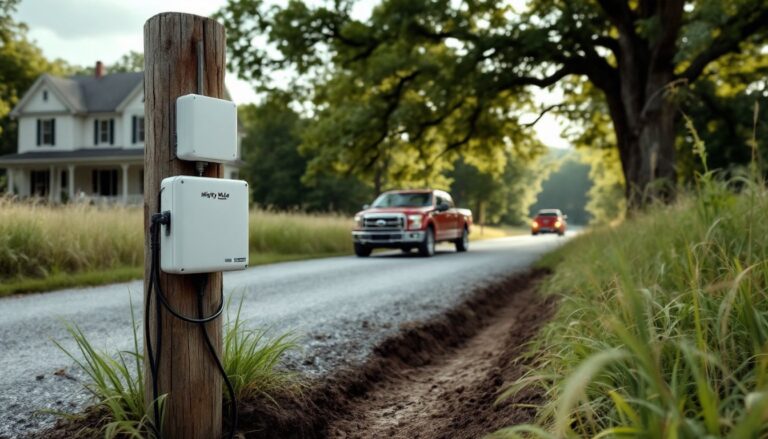
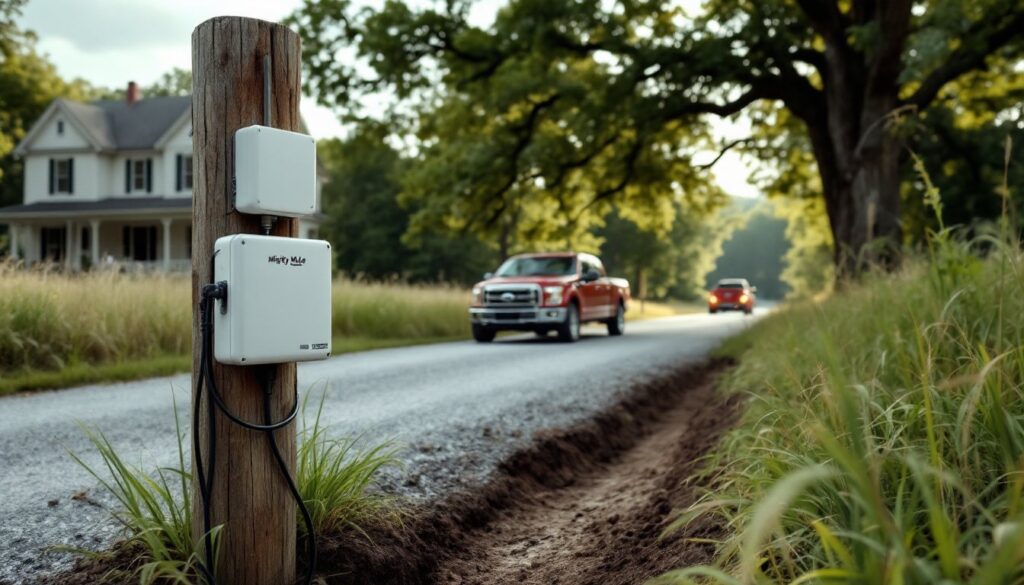
The basic system includes three components: a probe sensor (typically 3 to 4 feet long), a transmitter box that sends the signal wirelessly, and a receiver unit placed inside the home that sounds an alert. The sensor installs in a shallow trench alongside the driveway, with the transmitter mounted nearby on a post or tree. When a vehicle passes over or near the buried probe, the transmitter sends a radio frequency signal up to 1,000 feet (line of sight) to the receiver indoors.
Unlike beam-based systems that can trigger from animals or falling leaves, the magnetic probe design reduces false alarms. It won’t detect people on foot unless they’re carrying large metal objects. This makes it ideal for properties where deer, dogs, or wildlife would otherwise set off motion sensors constantly.
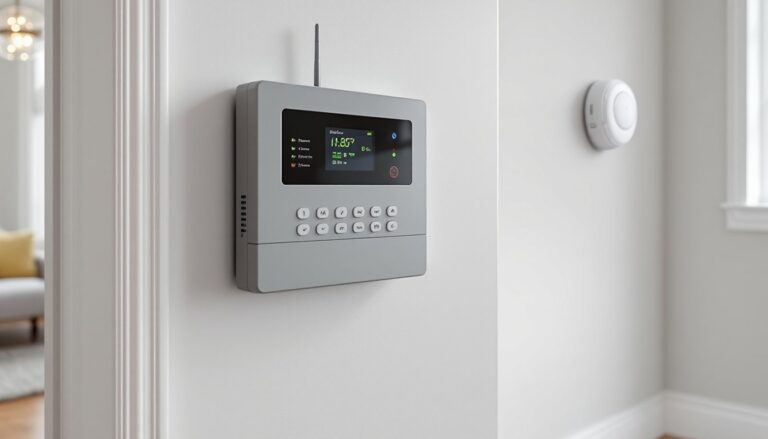
The receiver plugs into a standard 120V outlet and offers adjustable volume and multiple alert tones, so homeowners can distinguish between different entry points if they add multiple sensors. Some models include battery backup for the receiver, but the outdoor transmitter typically runs on four D-cell batteries that last 3,000 to 5,000 activations depending on traffic volume.
Key Features That Make Mighty Mule Stand Out
Mighty Mule systems pack several practical advantages that make them a favorite among DIY installers and rural homeowners.
Weather-resistant construction: The transmitter housing is rated IP55, meaning it handles rain, snow, and dust without failure. The buried sensor probe is fully waterproof and tolerates freeze-thaw cycles without cracking.
Expandable zones: A single receiver can pair with up to four transmitters, each with a distinct chime tone. This allows monitoring of multiple driveways, gates, or back access roads from one central unit.
Adjustable sensitivity: The transmitter includes a sensitivity dial that lets homeowners fine-tune detection range from roughly 8 feet to 20 feet. Lower sensitivity prevents triggering from vehicles on adjacent roads: higher settings catch slower-moving equipment.
No monthly fees: Unlike cellular or Wi-Fi security cameras, the Mighty Mule operates entirely offline. There’s no subscription, no app login, and no cloud storage, just a straightforward wireless signal between transmitter and receiver.
Long battery life: Outdoor transmitters run on standard D-cell alkaline batteries. In typical residential use (10-20 activations per day), batteries last 12 to 18 months before replacement.
DIY-friendly installation: The system requires no electrical wiring between sensor and receiver. Homeowners with basic hand tools, a post hole digger, shovel, and drill, can complete installation without hiring a contractor.
These features align well with properties that lack Wi-Fi coverage at the driveway entrance or where running buried cable would be cost-prohibitive.
Step-by-Step Installation Guide for DIY Homeowners
Installing a Mighty Mule driveway alarm takes 2 to 3 hours for most homeowners. The process involves minimal tools and no trenching of long cable runs.
Tools and Materials Needed
- Post hole digger or narrow spade shovel
- Drill with 1/4-inch bit (for mounting transmitter)
- Screwdriver (Phillips and flathead)
- Tape measure
- Four D-cell batteries
- Treated 4×4 post (if mounting transmitter on a new post)
- Gravel or concrete mix (optional, for post stability)
Installation Steps
-
Choose the sensor location: Position the probe 3 to 6 feet from the edge of the driveway, perpendicular to traffic flow. Avoid areas where water pools or where plows might strike the transmitter box.
-
Dig the probe trench: Dig a narrow trench 3 to 4 inches deep and just wide enough for the probe sensor. The probe should run parallel to the driveway edge, buried vertically or at a slight angle.
-
Insert the probe: Place the sensor probe in the trench with the cable end pointing toward where the transmitter will mount. Backfill with soil, tamping firmly to eliminate air pockets.
-
Mount the transmitter: Attach the transmitter box to a treated 4×4 post, tree, or existing fence post no more than 10 feet from the buried probe. The box should sit 3 to 5 feet above ground to avoid snow burial and improve wireless range.
-
Connect the probe cable: Run the probe’s cable from the trench to the transmitter box and plug it into the designated port. Most Mighty Mule models use a waterproof connector that clicks into place.
-
Install batteries: Insert four fresh D-cell batteries into the transmitter, observing correct polarity. The unit typically blinks an LED to confirm power.
-
Pair the receiver: Plug the receiver into an indoor outlet within wireless range (up to 1,000 feet line of sight, less through walls). Press the pairing button on both transmitter and receiver according to the manual. A test tone confirms successful pairing.
-
Adjust sensitivity: Drive a vehicle slowly over the sensor location. If it doesn’t trigger, increase sensitivity on the transmitter dial. If it triggers from passing traffic on a nearby road, dial sensitivity down.
-
Test multiple passes: Drive over the sensor at various speeds and angles to confirm consistent detection. Walk over the sensor to verify it doesn’t false-alarm on foot traffic.
Safety note: Always call 811 (or your local utility locating service) before digging, even shallow trenches. Underground utilities can include electric, gas, water, and fiber optic lines.
No electrical permit is required for this installation since it’s a low-voltage, battery-powered system. But, if burying the sensor near a property line or right-of-way, check local easement rules.
Troubleshooting Common Issues and Maintenance Tips
Even straightforward systems like the Mighty Mule can develop issues over time. Most problems trace back to batteries, interference, or sensor placement.
No alert when vehicle passes: First, check transmitter batteries, weak batteries reduce range and sensitivity. If batteries are fresh, verify the probe cable connection is seated fully in the transmitter. Inspect the cable for cuts or rodent damage. If the probe was installed in rocky or heavily compacted soil, detection range may be reduced: try repositioning slightly deeper or closer to the driveway edge.
False alarms: Sensitivity set too high can trigger from distant traffic or large metal objects like trash cans. Dial sensitivity down incrementally. Electrical interference from nearby power lines, motors, or RF equipment can also cause phantom alerts: relocating the transmitter 10 to 15 feet may help.
Intermittent signal loss: Trees, hills, and metal-sided buildings block wireless signals. If the receiver loses contact with the transmitter during certain weather conditions, try relocating the transmitter higher on its post or moving the receiver closer to an exterior wall. Some users add a wireless repeater (sold separately) to extend range through obstacles.
Short battery life: Traffic volume directly affects battery lifespan. Properties with 50+ daily activations may need battery replacement every 6 to 9 months. Cold weather also reduces alkaline battery capacity: consider switching to lithium D-cells for better performance below freezing.
Routine Maintenance
- Replace transmitter batteries annually, or sooner if the low-battery LED illuminates.
- Inspect the transmitter housing for wasp nests or moisture intrusion twice per year.
- Clear snow, leaves, and debris from around the transmitter to maintain wireless line of sight.
- Test the system monthly by driving over the sensor and confirming the receiver chimes.
No lubrication or sensor calibration is needed. The probe itself is maintenance-free once buried.
Comparing Mighty Mule Models: Which One Is Right for Your Property?
Mighty Mule offers several driveway alarm models, each suited to different property layouts and budgets. Understanding the differences helps homeowners choose the right system upfront rather than upgrading later. Many homeowners rely on reviews of top driveway alarms when comparing features across brands.
FM231 Wireless Driveway Alarm: The entry-level model includes one sensor probe, one transmitter, and one receiver. It provides a 1,000-foot wireless range and supports up to four zones with additional transmitters. This is the most popular choice for single-driveway residential properties.
FM232 Extended Range Kit: Similar to the FM231 but with a longer 2,000-foot wireless range. Best for properties with heavy tree cover, multiple buildings, or where the receiver needs to sit deep inside a large home or workshop.
DCRBA-4500 with Solar Panel Option: This model includes a solar panel that trickle-charges the transmitter batteries, extending battery life to 2+ years in sunny climates. Ideal for remote locations where frequent battery swaps are inconvenient or for eco-conscious homeowners.
Commercial-Grade FM350: Designed for high-traffic applications like businesses, farms, or shared driveways. Features a heavy-duty probe rated for 10,000+ activations, weatherproof connectors, and a transmitter with adjustable time delay to prevent rapid repeat alerts.
Choosing Based on Property Type
- Suburban homes with 100–300 foot driveways: FM231 handles this range easily and costs less than $100.
- Rural properties with 500+ foot driveways or obstacles: FM232 or add a wireless repeater to the FM231.
- Off-grid cabins or solar-powered setups: DCRBA-4500 with solar eliminates battery changes.
- Shared driveways or commercial use: FM350 withstands higher traffic volume and reduces nuisance alerts with adjustable delay.
All models use the same probe sensor design, so performance in detecting vehicles is comparable. The primary differences are wireless range, power options, and build quality.
Maximizing Your Driveway Alarm’s Effectiveness
A driveway alarm is most useful when integrated into a broader property security and convenience strategy.
Pair with exterior lighting: Connect a motion-activated floodlight or use a smart plug to trigger exterior lights when the alarm chimes. This deters potential intruders and helps identify visitors at night.
Add multiple zones for large properties: Install a second sensor halfway up a long driveway to get advance notice before vehicles reach the house. Use distinct chime tones for each zone, one tone for the main entrance, another for a back gate.
Integrate with smart home systems: Some homeowners connect the receiver’s audio output to a home automation hub using a relay module. This allows logging alerts, sending smartphone notifications, or triggering other devices. This requires basic wiring skills and a compatible hub.
Position thoughtfully around curves and hills: On driveways with blind curves, place the sensor on the far side of the curve to give maximum warning time. On steep hills, install the sensor at the bottom where vehicles travel slowly.
Use in combination with cameras: A driveway alarm notifies you someone is coming: a security camera shows who. Many setups, featured in home tech coverage, pair wireless alarms with battery-powered cameras at the gate.
Weatherproof the transmitter mounting: Even though the transmitter is rated for outdoor use, mounting it under a small roof overhang or attaching a UV-resistant cover extends its lifespan and keeps snow from blocking the antenna.
Educate household members: Set distinct tones for different sensors so everyone knows which entrance was triggered without looking. This is especially useful for families with side yards, back gates, or shop access.
Test after storms: High winds, heavy snow, and falling branches can shift or damage the transmitter. A quick test drive after severe weather confirms everything still works. Reliable home safety guides emphasize this kind of routine system verification.
Conclusion
The Mighty Mule driveway alarm delivers straightforward, reliable vehicle detection without the cost or complexity of wired systems. Its magnetic sensor design minimizes false alarms, and the wireless architecture makes it accessible to DIYers with basic hand tools. Whether monitoring a suburban driveway or a half-mile ranch entrance, choosing the right model and installing it thoughtfully ensures years of maintenance-free service.